February 14th, 2026
Newbie's Guide | How Delightful Is Core Bed Pilates?
When beginners start practicing Pilates, the most confusing thing is: on the mat, there’s no sensation; with the equipment, they are afraid it’s too difficult and they can’t keep up?
It wasn’t until they tried the core bed Pilates that they discovered that exercise can be so “friendly and efficient” – there’s no need to endure high-intensity workouts. There’s no need to worry about not performing the movements correctly. After practicing, the body becomes relaxed and clear.
This is the light exercise that modern people should unlock. After reading this, beginners can close their eyes and rush to try it!
Many beginners have the first impression that the core bed is “complicated, professional, and suitable for experienced practitioners”. But in fact, it’s the opposite: The core bed is the most suitable Pilates equipment for beginners.
Its “charm” lies in its tolerance for beginners and its efficient training effect. I’ll explain it all in one go today, helping you avoid beginner mistakes and quickly get the joy of core bed Pilates.
Core Bed Pilates, the "painless shaping tool" for beginners
Compared to using Pilates mats, the biggest advantage of the core bed is that it has equipment assistance, allowing for more precise exertion and a higher tolerance rate.
Novices no longer need to worry about “not being able to find the exertion point” or “making mistakes in the movements that could harm the body”. They can easily experience the charm of Pilates, and this is what makes it the most appealing aspect.
Work more precisely, even beginners can get it right, and avoid wasting effort.
When beginners start practicing Pilates, the most common mistake they make is “incorrect force application” – for instance, using their neck to exert force when working on the waist and abdomen, or using their knees to compensate when working on the buttocks and legs. In the end, not only will there be no effect, but they are also prone to experiencing back pain and stiffness.
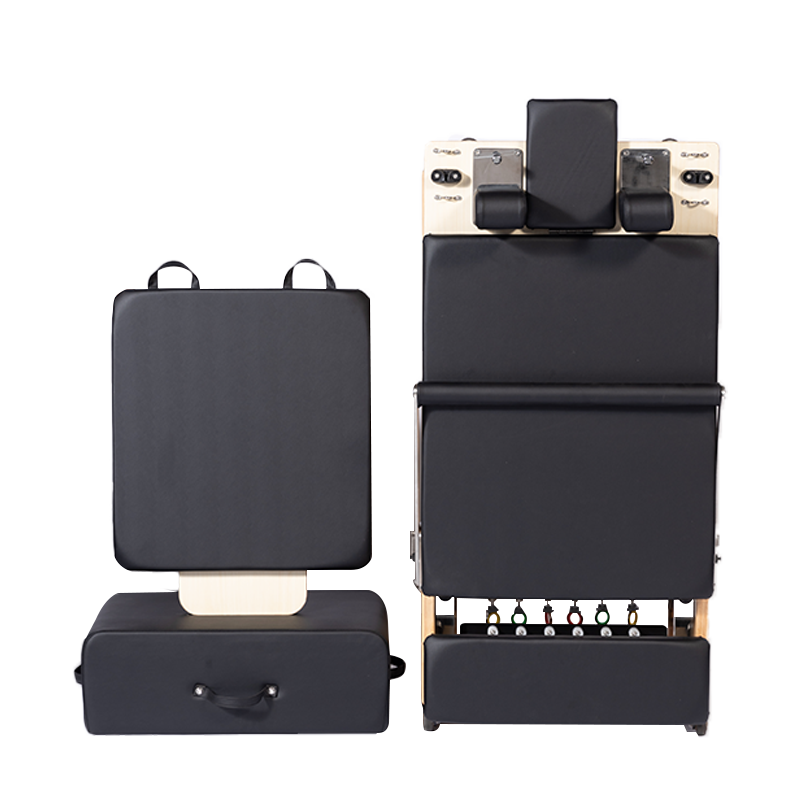
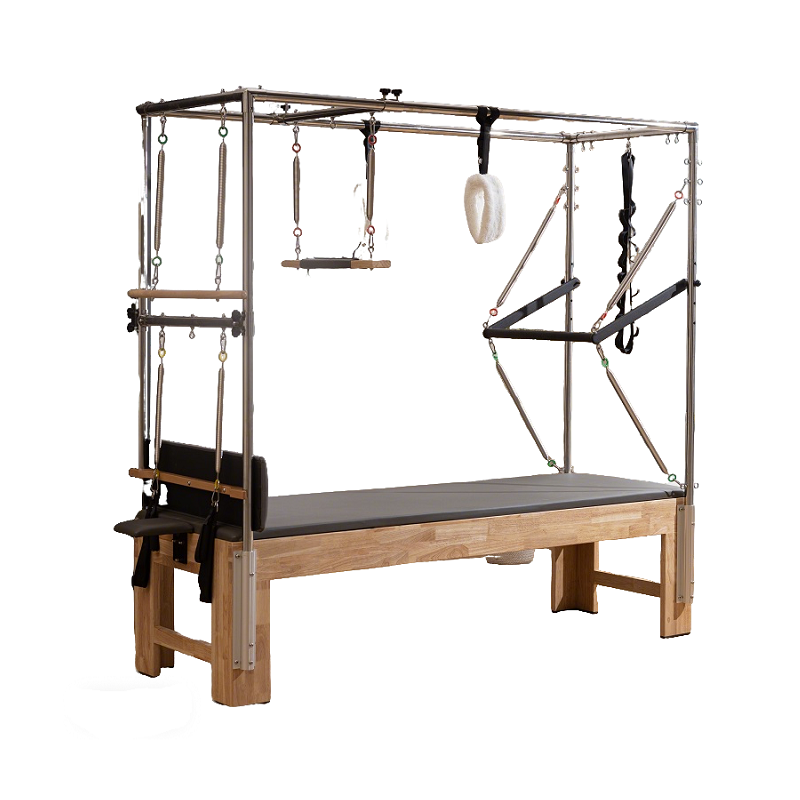
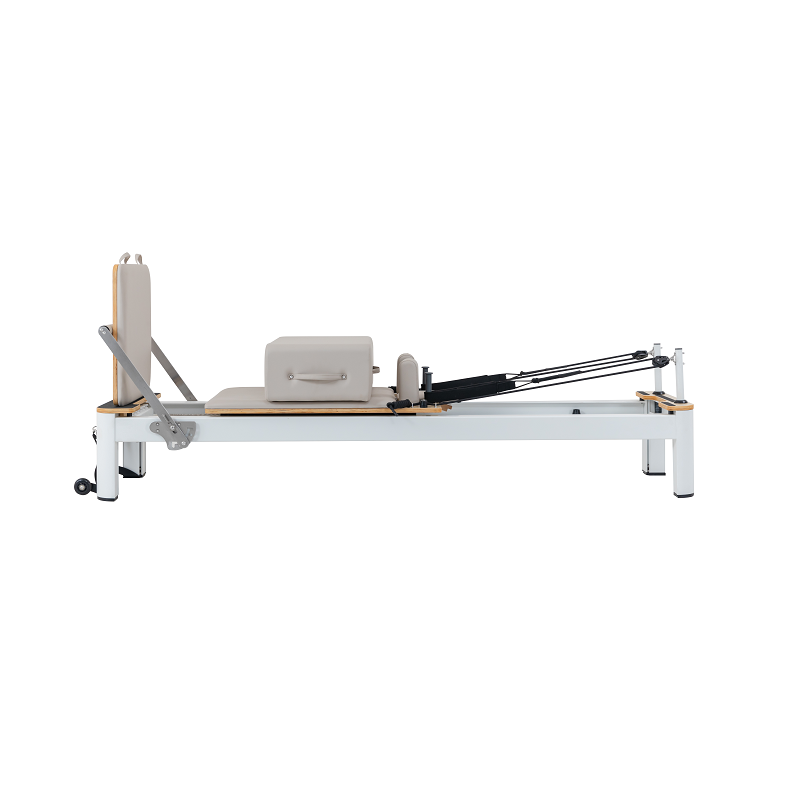
However, the springs, sliding beds, foot rods and other equipment on the core bed can help “fix the force application trajectory” and guide the body to find the correct force application points.
For example, when practicing the core, the resistance of the springs will limit the excessive body movement, forcing you to focus on tightening the waist and abdomen. When doing the hip bridge, the foot rods can help stabilize the legs and prevent the front side of the thighs from compensating.
Even for the first time, you can clearly feel the soreness and tension of “core force application” and “hip force application”. There is no need to blindly explore anymore. Each movement can precisely target the target muscle group, and practicing for 10 minutes is more effective than practicing on a mat for 30 minutes.
Low-intensity but high-yield, you can shape your body and maintain your posture even without running or jumping.
For beginners, those who spend long periods sitting, and people with knee/waist discomfort, core bed Pilates is truly a “miracle exercise”. It doesn’t involve intense jumping or high-intensity weight-bearing.
All the movements are carried out within a slow and controllable range, causing almost no impact on the joints. There’s no need to worry about getting injured.
However, low intensity doesn’t mean no effect: The spring resistance of the core bed can be adjusted according to one’s own situation. Beginners start with the minimum resistance and gradually progress, which can not only activate deep muscles and tighten the core, but also improve rounded shoulders, hunched back, and forward tilt of the pelvis, etc., resulting from a sedentary lifestyle.
After long-term practice, the waist and abdomen will become flatter, the hips will become more arched, the lines will be tighter, and the overall temperament will be enhanced. Moreover, after exercising, the body is relaxed and there won’t be the soreness after intense exercise. The next day, one can still go to work or live normally.
Balance relaxation and recovery to alleviate the fatigue caused by prolonged sitting
Compared to other “training only without nourishment” exercises, core bed Pilates places greater emphasis on “body balance” – it not only shapes the body but also relaxes tense muscles and alleviates back pain and shoulder-neck stiffness caused by prolonged sitting.
For example, with the sliding bed of the core bed, one can easily perform spinal stretching and shoulder-neck relaxation movements, stretching tense back muscles and trapezius muscles. After each session, one can feel their body being “pulled apart”, and the fatigue instantly disappears.
For beginners who often stay up late and sit at their desks for long periods, practicing core bed Pilates is like exercising while giving the body a “deep massage”, achieving both shaping and nourishment. This is also the reason why it has gained more popularity than other exercises.
Newbie's Must-Know: A Beginner's Guide to Avoiding Pitfalls in Core Pilates Training
Although the core bed is quite user-friendly for beginners, during the first attempt, one still needs to avoid these pitfalls in order to practice more efficiently and safely, and to prevent getting injured as one keeps practicing.
Pitfall 1: Blindly pursuing "high intensity", while neglecting the sense of exertion
For beginners, never start by increasing the spring resistance too much, thinking that “the greater the resistance, the better the effect”.
The core of the core bed is “precise force application”, not “brutally enduring the resistance”. If the resistance is too high, you will be forced to compensate with an incorrect force application method, which is more likely to cause injuries to the waist and knees.
It is recommended that beginners start with 1-2 light resistance springs. First, find the force application feeling, then gradually increase the resistance, and proceed step by step. This is the key.
Pitfall 2: Ignoring breathing techniques. Practicing incorrectly is like practicing in vain
The essence of Pilates is “breathing”, and this is true for Core Bed Pilates as well. Novices often focus solely on the movements and forget to breathe, or their breathing and movements are out of sync. This not only fails to achieve the desired results but also increases the physical burden.
The correct way of breathing is as follows: exhale when exerting force (such as tightening the core, lifting the body), inhale when relaxing (such as lowering the body, stretching the spine), and the breathing should be slow, deep, and in sync with the movement rhythm. Mastering breathing is considered the true entry into Pilates.
Pitfall 3: Practicing alone without any guidance from professionals
The equipment for the core training is quite specialized. Although it may seem simple, the angle of the movement and the force applied require a certain level of skill. Novices often struggle to master these aspects on their own.
If one practices alone without guidance, it is very likely to develop incorrect movement habits. It is difficult to correct these later and there is a high risk of injury.
It is recommended that beginners seek guidance from a professional Pilates instructor for their first session. The instructor will adjust the height of the equipment and the resistance of the springs based on your physical condition, correct your movements, help you quickly find the right sense of force application, and avoid many unnecessary detours.
Pitfall 4: Acting too hastily, expecting "immediate results"
Pilates is a form of “slow movement”, and core bed Pilates is no exception. Its effects are not achieved overnight and require long-term persistence.
Novices should not expect to lose weight around the waist and abdomen and improve their posture after just one or two sessions. Generally, it takes 4 to 8 weeks of consistent practice to notice significant changes in the body – the core becomes stronger, the shoulders and neck become more relaxed, and the lines become tighter.
Taking it slowly will actually lead to faster results. If you persist for a long time, you will find that your posture and temperament are gradually improving.
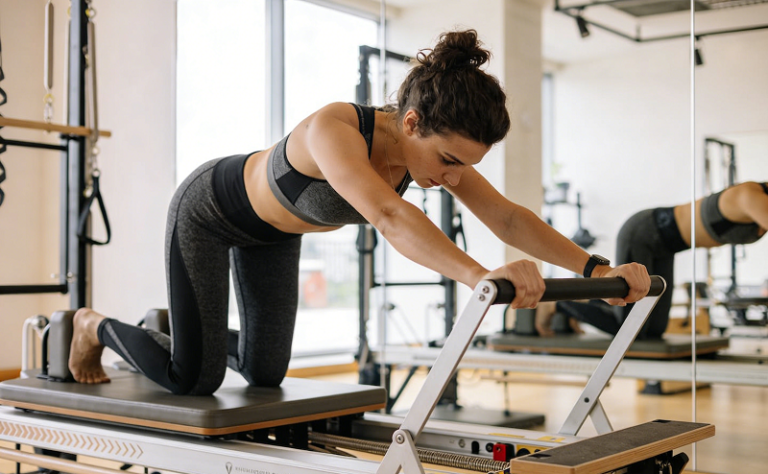
Finally, I would like to say: Core Pilates is the "gentle salvation" for beginners.
If you are a beginner, afraid of intense exercise, yet want to improve your posture, shape your body and lose weight;
If you sit at your desk for long periods and suffer from stiff shoulders, neck pain, and backaches, and are looking for a workout that can both relax and exercise;
If you tried doing Pilates on a mat but didn’t see results, and are looking to unlock a more efficient and friendly training method, then Core Bed Pilates is definitely worth giving a try.
It is not just an exercise, but a way of life – no need to struggle or worry. In slow and controlled movements, feel the changes in your body, achieving a good figure while also relieving the fatigue of daily life.
Newbies don’t have to worry about not keeping up or making mistakes. Take the brave first step. You will discover: The charm of Core Bed Pilates, once you try it, you’ll never be able to quit~