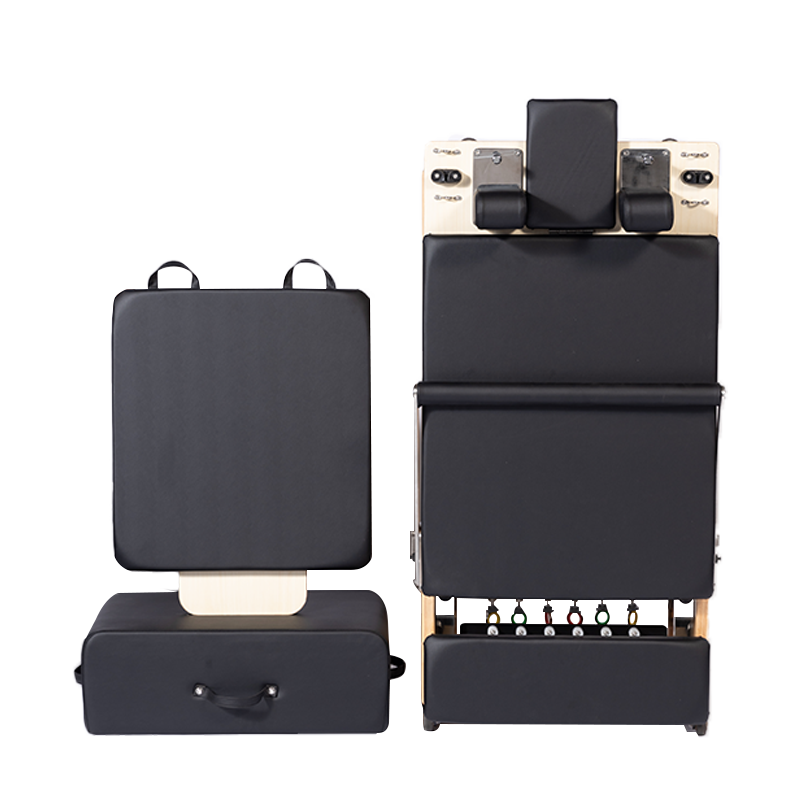
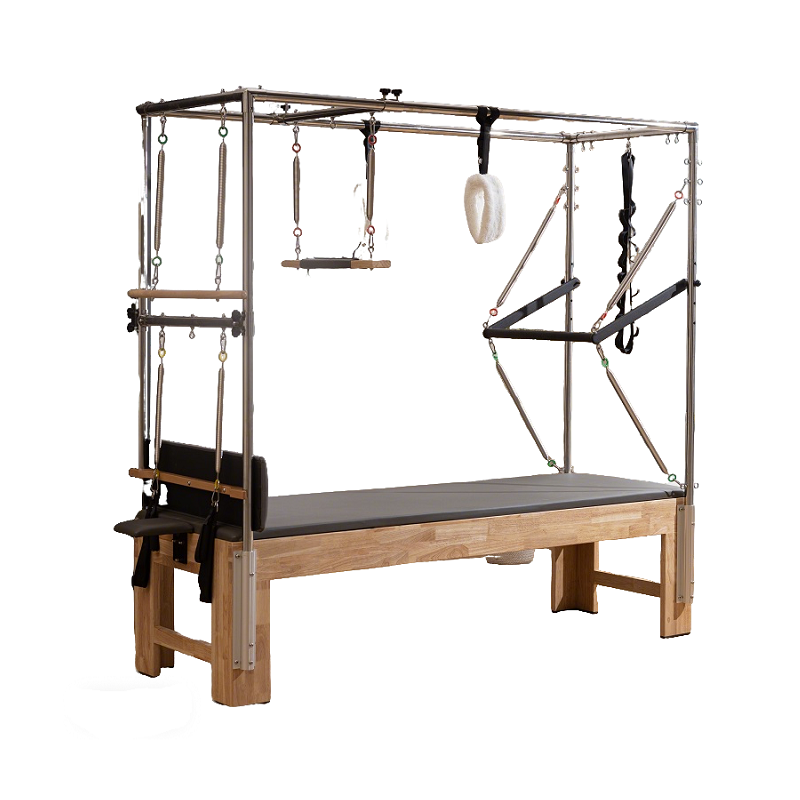
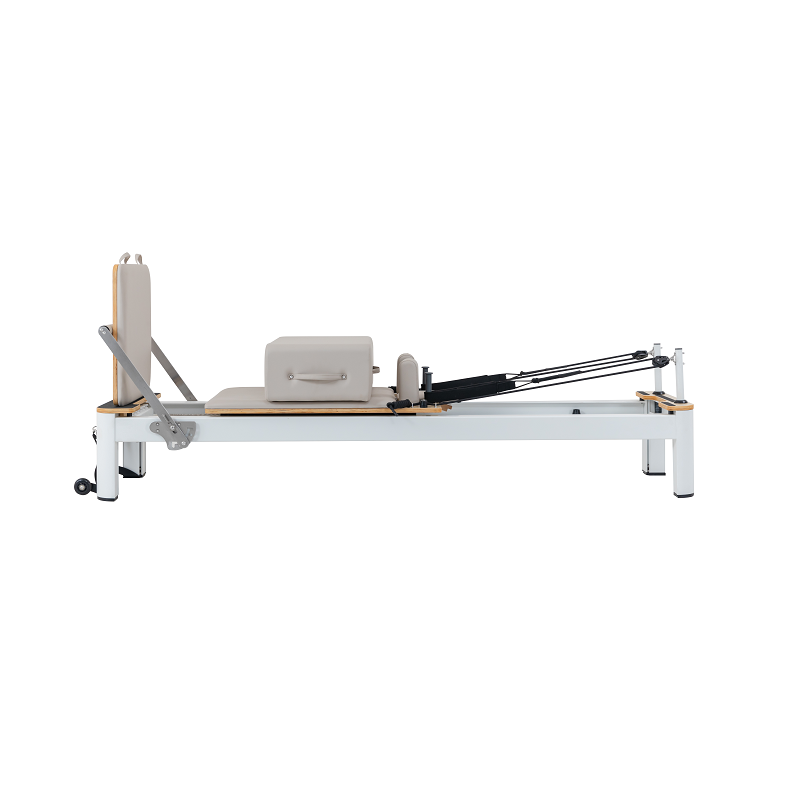
Reformer vs. Mat Pilates: Defining the Depth of Boutique Studios
In the world of Pilates, Mat Pilates is the soul, and Reformer Pilates, the core bed, is the science that takes this art to the extreme.
For studio owners or fitness equipment dealers, understanding the core differences between the two is not only a mechanical discussion, but also a choice of business strategy.
The following is a deep disassembly based on biomechanics and business operations logic.
I.Resistance: Linear Springs vs. Constant Gravity
This is the most essential difference between the two: pad training relies mainly on gravity and self-weight.
This means that resistance is relatively constant in the movement trajectory and is heavily dependent on the practitioner’s control over the body.
The core of the core bed is the spring system:
Linear resistance: The resistance provided by the spring increases with the stretch length, which is more in line with the natural characteristics of muscle contraction.
Centrifugal control: In the process of retracting the skateboard, the centrifugal force generated by the spring forces the muscles to undergo high-intensity Eccentric Contraction, which is an efficient path for shaping and deep strength training.
B2B Insight: The versatility of the springs allows the studio to serve clients across all dimensions, from rehabilitated patients to top athletes.
II. Biofeedback: The "Teacher Inside the Machine"
Pilates on the mat are called the “hardest Pilates” because it doesn’t have any external support.
The core bed provides immediate physical feedback through the movement of the skateboard (Carriage).
Closed Chain Motion Environment: The pulleys and pedals of the core bed create a closed chain movement environment.When the skateboard produces subtle left and right shaking, it immediately feeds back to the practitioner’s central nervous system, forcing deep, small muscle groups to intervene to find balance.
Accurate correction: For coaches, it is easier to find compensation problems by observing the trajectory of the skateboard than by observing the muscle beats of the members.
III. Versatility: Breaking the Plane of Movement
The training on the mat is limited to the ground plane, while the core bed three-dimensionalizes the training space through ropes, handles, and adjustable pedals.
All-round training: In the core bed, users can perform resistance training in sitting, kneeling, standing, and even lying on their side.This range of motion (ROM) of three-dimensional space is beyond the reach of mat training.
Adjustability: By varying the length of the spring or rope, the same set of actions can evolve dozens of difficulty gradients, ensuring the long-term appeal of the course.
IV. The Business Edge: Why Reformers Drive Revenue
For B-side clients, the choice of device directly determines the ceiling of the studio.
High-end positioning: Core bed studios are often able to charge 2-3 times more for class hours than they would for a mattress course.
This “premium feeling” stems from the professional endorsement of the device and the obvious physical differences.
Customer retention: Shorter feedback cycles for core bed training provide members with a clearer sense of strength growth, leading to higher repurchase rates.
Asset premium: A well-crafted professional core bed, such as [your brand name], is a depreciable asset whose durability ensures low marginal costs for long-term operations.
V. Choose Your Core
Pilates on the mat show the freedom of the body, while Pilates on the core bed show the precision of control.
For brands looking to expand globally, the core bed is not just a product, it’s a lever to help your B-end customers achieve their business vision.