Article
June 18, 2026
Structural Evolution + Spatial Premium: An Interpretation of Folding Pilates Market Trends
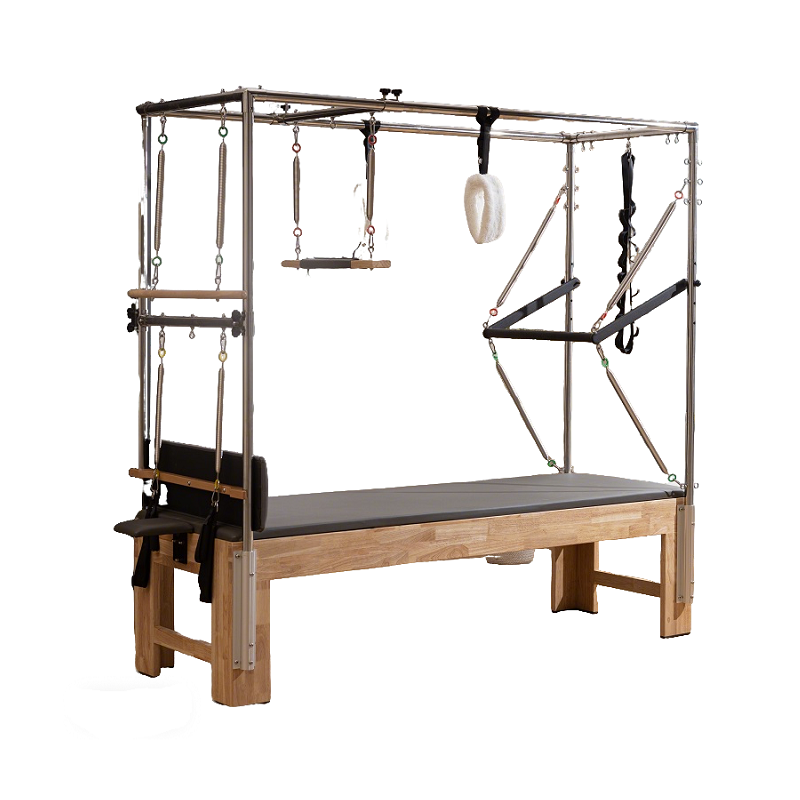
In the past few years of Pilates equipment export trade, large wooden core beds have been the main force of stable shipments.
However, starting in 2024, we observed a significant trend in the background data: the proportion of inquiries to orders for folding Pilates beds is rising rapidly.
This is not a coincidence, nor is it a fleeting heat packaged by marketing, but a true portrayal of the transition of the Pilates movement from “professional venue elitism” to “family life” on a global scale.
The following is an in-depth analysis of the underlying logic of the popularity of folds, combining the realities of the production side and the market side.
I.The core logic: to solve the "space utilization" just need
Whether in New York, London, or Shanghai and Tokyo, Pilates user portraits are highly overlapping: well-educated, affordable, and mostly live in densely populated first-tier cities.
In these areas, there is a very high premium for living space.
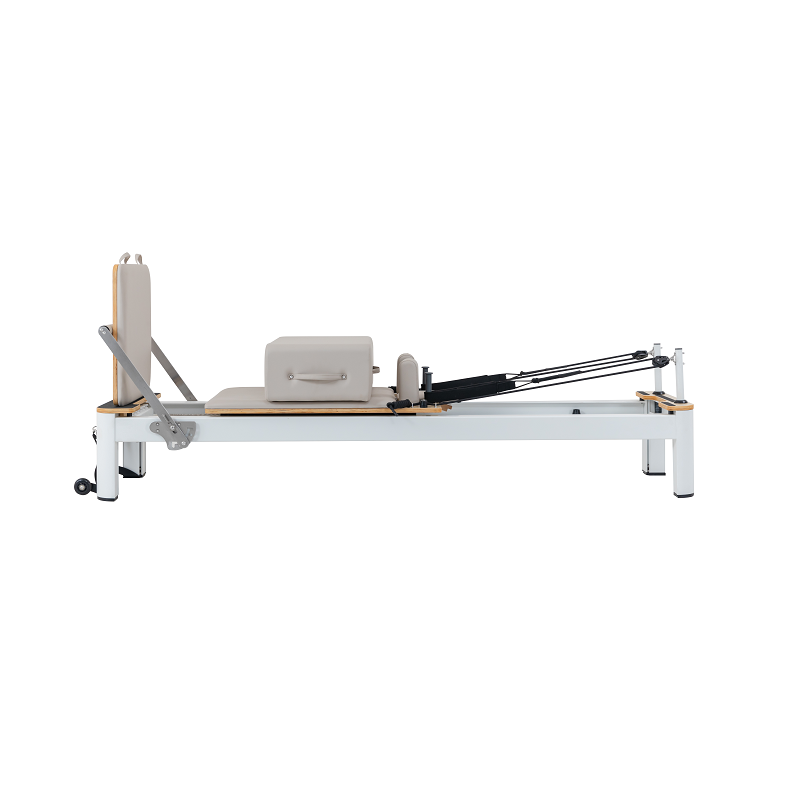
A standard professional core bed, typically between 2.3m and 2.5m in length, plus the necessary four-sided activity space, needs to occupy a fixed area of at least 4-5㎡.
For many home users, permanently sacrificing 5 square meters of the living room or bedroom to house an appliance can be extremely costly.
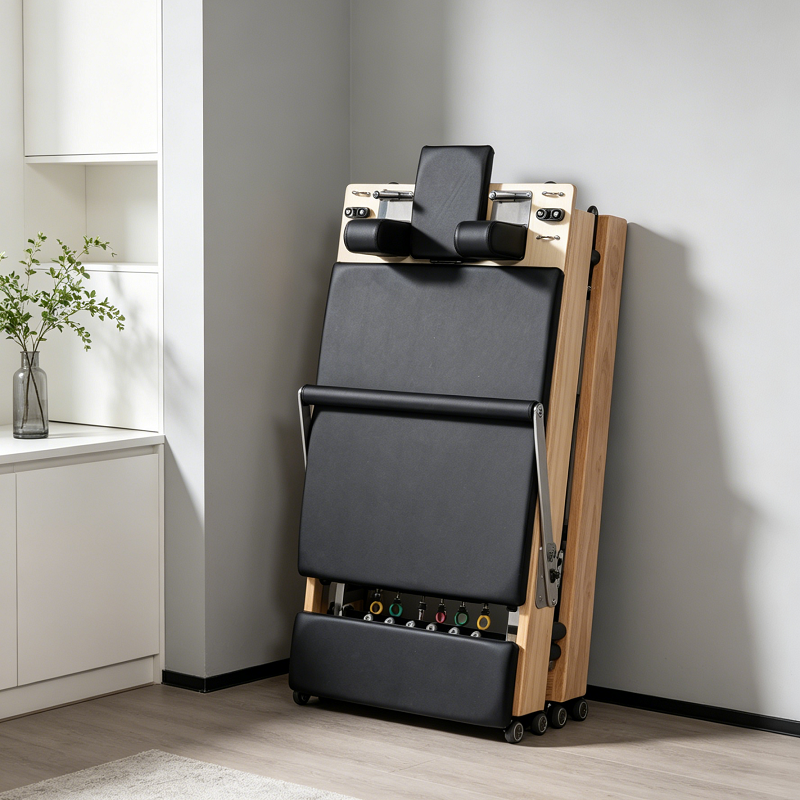
The emergence of a folding core bed breaks this’ exclusivity ‘.
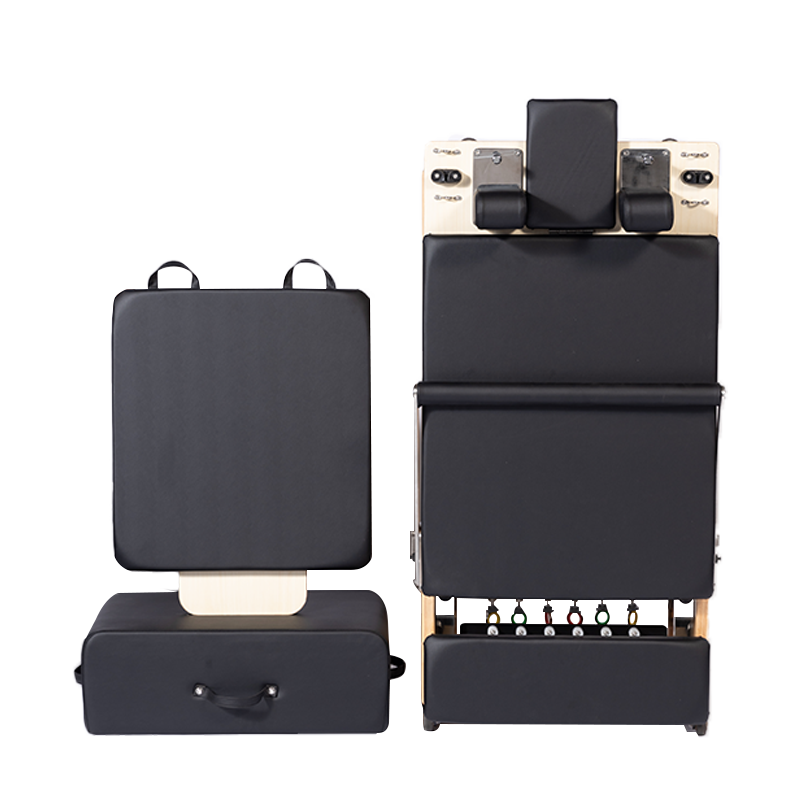
Our measured data shows that the folded device occupies less than 1/3 of the original area, and the height can usually be controlled at 40-50 cm (stored upright or pushed under the bed).
This “professional time use, no time to hide” feature has transformed Pilates equipment from “bulky furniture” to “flexible tools”.
This is the primary realistic reason why many middle-class customers choose folding models at present.
II. Real Cost Reduction at the Logistics End: The Cost Chain from the B End to the C End
As a B2B brand, we have to face the reality that the size of the Pilates device directly determines its final arrival price.
Sea efficiency: In a standard 40-foot cabinet, folding models typically pack 1.5 to 2 times as much as a regular wooden bed.This means that the maritime freight cost shared by a single device has dropped significantly.
“Last mile” delivery: Fixed large wooden beds often require a professional logistics team to deliver to your door, or even a forklift or multiple porters.Folding models (especially aluminum alloy) usually meet the shipping standards of some courier channels, or at least enter the standard home elevator, which greatly reduces the rejection rate and additional service fees for end deliveries.
For B-end distributors, folding means faster turnover and lower inventory pressure; for end customers, this part of the logistics cost savings is directly reflected in more competitive selling prices.
III. Evolution of structural technology: eliminating the stereotype of "folding is unstable"
For a long time, professional coaches did not recommend folding models for a simple reason: the folding hinges are prone to abnormal noise, smooth sliding, and the long-term use of the structure is loose.
But now the reality is that the level of industrial manufacturing has solved these pain points.
Current mainstream premium folding beds, such as our range of high-strength aviation aluminium, use heavy-duty steel hinges and precision alignment pin technology.
When the device is deployed and locked, the consistency of its orbit and the rigidity of the overall frame have been able to meet more than 95% of the non-competitive training needs.
We found that the static load-bearing and dynamic smoothness of modern folding beds have little difference in body feel from fixed beds through pressure tests at the factory end.
Customers dare to buy because they find that today’s folding beds are no longer “simple toys” but “professional equipment that can be stored”.
IV. Changes in user training habits: fragmentation and high frequency
The Pilates movement is undergoing a shift from “going to the pavilion twice a week” to “practicing for 20 minutes a day”.
When the device is placed in the home and does not occupy a fixed space, the user’s training frequency will be significantly increased.
For many customers, a folding bed provides a “degree of psychological freedom” – I don’t have to redecorate the room for this machine, nor do I have to feel indebted to space utilization when not practicing.
In addition, with the outbreak of online Pilates courses (Apps, YouTube channels), home users are increasingly demanding the ease of operation of the device.
Folding beds are often equipped with a more intuitive adjustment mechanism, which is more in line with the user experience in modern fast-paced life.
V. Minimalist Shift in Aesthetic Trends
From the perspective of visual reality, the traditional heavy-duty solid wood core bed has a strong industrial or traditional physiotherapy atmosphere.
The modern folding core bed is mostly made of sandblasted aluminum alloy and Morandi leather, and the appearance is smooth and clean.
This minimalist design language makes it easier to blend into the decor of a modern apartment.
It’s not just a piece of fitness equipment, it’s more like a technology product with a sense of design.
This visual characteristic of “de-heaviness” has a natural communication advantage in the age of social media.
Conclusion
Choosing a folding Pilates bed is not a “compromise” for the client in terms of professionalism, but the optimal solution they find between limited urban space and an efficient training goal.
For the brand, this represents the future direction of Pilates device design: more sophisticated, lighter and more modular.
We insist on continuously optimizing the durability of the folding structure without sacrificing stability, precisely to comply with this real wave from the venue to the family.